Cabarrus Amateur Radio Society

Cabarrus County, Concord, NC


Building a Pneumatic Antenna Launcher
Getting an antenna wire over a tall tree is one of the biggest challenges when installing HF antennas. An antenna line launcher provides a reliable way to place a lightweight pilot line over branches 80–150 feet high without climbing. This article explains how to build a compressed-air antenna launcher using common materials, along with practical design considerations, safety precautions, and operating tips that experienced amateur radio operators use in the field.


Disclaimer
The information provided in this article is for educational and informational purposes only. The author and publisher assume no responsibility or liability for the construction, use, misuse, or results of any device built using this information. Any construction or operation of devices involving pressurized systems or projectile launchers carries inherent risks.

Anyone choosing to build or operate equipment based on this information does so entirely at their own risk. The builder/operator is solely responsible for ensuring that all materials, construction methods, and operating practices comply with applicable safety standards and local laws.


When I lived up in New Hampshire, I had proper towers with beams — the kind of setup built for serious DX work. They predated my marriage, so there wasn’t much my XYL could do about it… other than politely remind me how “decorative” they weren’t.

Then we moved to North Carolina. Suddenly the choice was simple: either I have a tower, or I keep my XYL. That pretty much settled it. Trees became the only viable option — wire antennas, maybe even a suspended beam like a Spiderbeam on a rotator if I could pull it off.

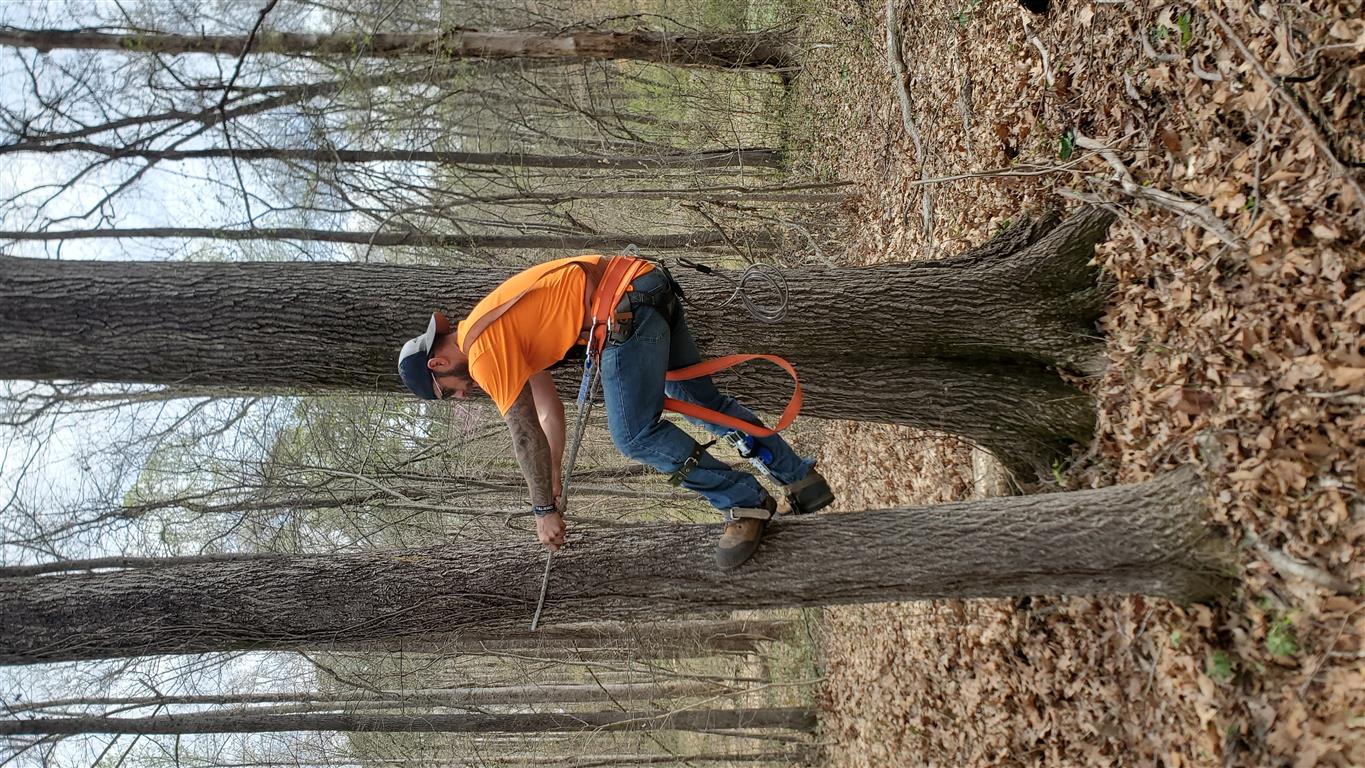
Thankfully, I’ve got several acres loaded with tall, straight trees — most pushing 120 feet. Realistically, that means I can get antenna apexes up around 100 feet or so… if I can actually reach that height. I looked into hiring climbers, but they wanted about $500 per tree. There was no way I was shelling out $3,000 just to hang some wire. And I wanted the flexibility to add more antennas in the future.


My buddy tried, but small is what he could do. I needed to go big!

So I went back to first principles. There are a few ways to get a line that high, but if you want something repeatable and truly safe, there’s really only one practical solution: build a pneumatic antenna launcher.

Just building something and “seeing what happens” simply isn’t in my DNA. Being a physicist, I obviously wasn’t going to start gluing pipe together without running the numbers first.

The Design
Calculations showed that a 3-inch diameter, 3-foot air reservoir feeding a 2-inch, 4-foot launch tube falls into a very favorable size-to-performance window. For pneumatic launchers using a moderately restrictive valve, a chamber-to-barrel volume ratio of roughly 1.5–2:1 is typically the efficient zone, and a 48-inch barrel sits right in that range. Stretching the barrel to 72 inches pushes the system toward expansion-limited flow, where pressure falls off too quickly unless the valve has exceptional throughput.

So the chamber ratios are:
48 in tube → 1.58 : 1 — efficient expansion
72 in tube → 1.05 : 1 — marginal

With a 1.05:1 chamber ratio at 72 inches, I would only expect a modest improvement — certainly not dramatic. Perhaps a 5–15% velocity increase if the valve flows well. For that reason, I decided to stick with a 48-inch launch tube.

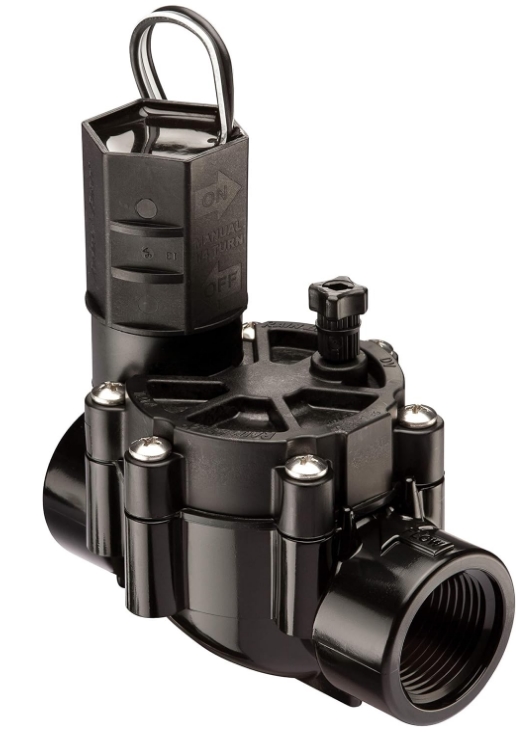
No practical valve opens instantly, of course. But based on prior design experience — the sort of experience you don’t typically publish on a hobby site — I felt that a Rain Bird CP-100 could move enough air once properly modified, as others have demonstrated. In stock form it’s far from ideal; the tiny factory bleed path simply cannot vent the top chamber quickly enough for good performance.

It is also important to use an optimally weighted tennis ball. There is a clear trade-off:
  • Too light → velocity is high, but air drag quickly kills the trajectory
  • Too heavy → velocity is low

There is a sweet spot somewhere in between. For a 2-inch sphere fired at a 75-degree angle, maximum apex height occurs with a projectile mass of about 130 g. That provides enough inertia to resist drag without sacrificing too much acceleration.

To reach that weight requires approximately 40–41 modern pennies, added to the standard 0.9 oz tennis ball.
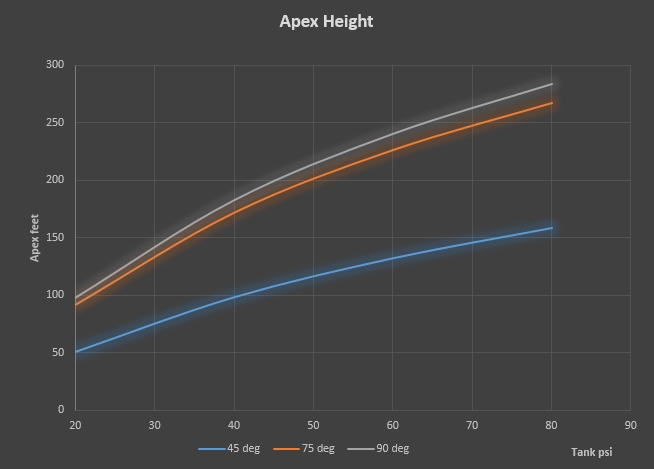
So what can we expect? Since I don’t anticipate firing straight up, I calculated the projections for 45°, 75°, and 90° launch angles, at various tank pressures.


The takeaway was straightforward: with a 3" × 36" reservoir, 2" × 48" barrel, and 80 psi in the tank, an ideally weighted mini tennis ball could theoretically reach about 335 feet straight up. This assumes:
  • a non-ideal valve
  • a reasonable projectile seal
  • minimal dead volume (~4 cubic inches)
  • a drag coefficient of roughly CD ≈ 0.8
  • no major projectile deformation during flight

Even after accounting for additional real-world losses — valve lag, turbulence, imperfect seals, projectile deformation, and line drag — the numbers still point comfortably toward 250 feet of achievable altitude.

Not that such height is the goal. The objective is simply to get a line over a tree, not to launch something into orbit.
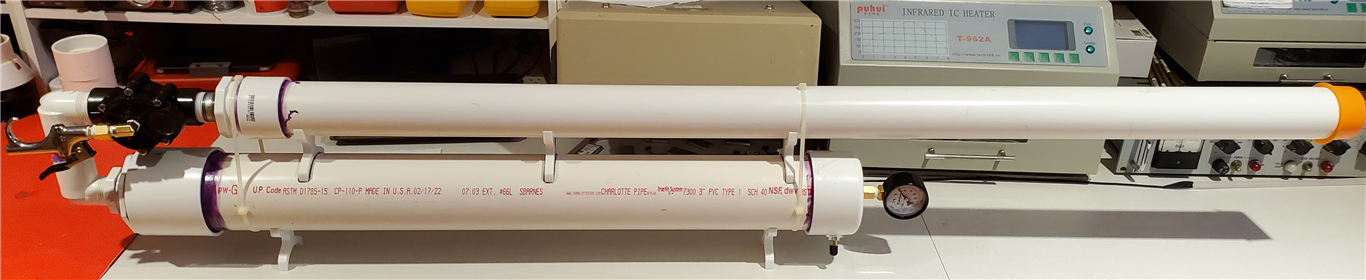
The final layout uses a folded configuration, with the launch tube positioned above the air tank and the valve placed so that the dead volume between valve and projectile is kept as small as possible.

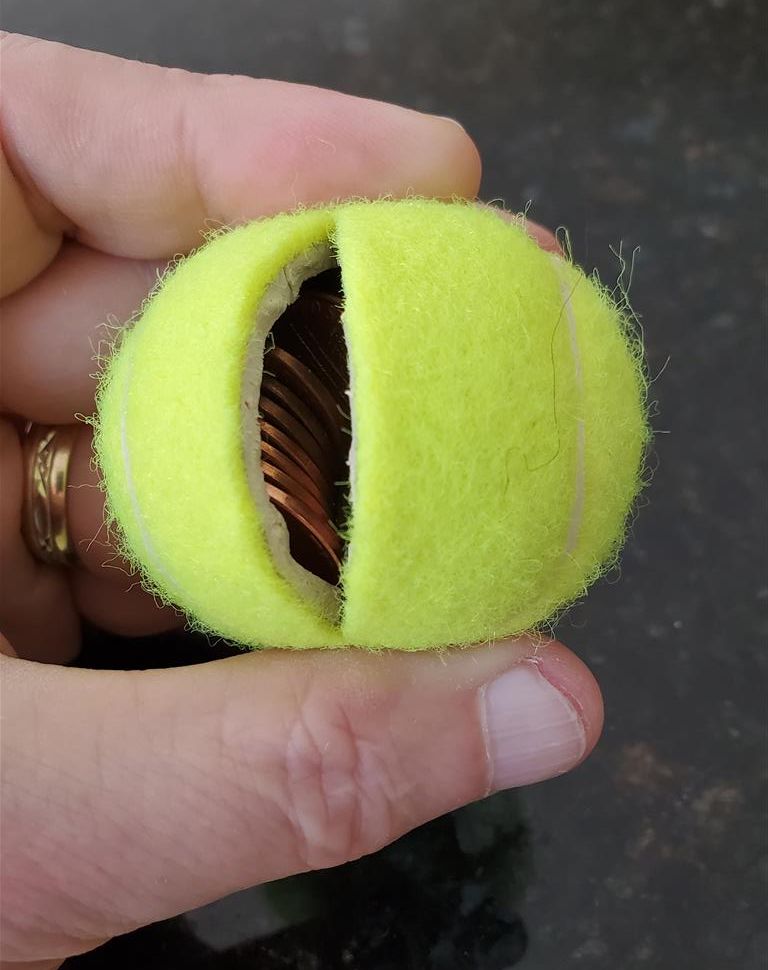
The projectile itself is a 2-inch dog-toy tennis ball, weighted with 40 pennies. It’s not a regulation tennis ball but the smaller version made for small dogs, and it fits cleanly inside 2-inch PVC pipe.

Building the Launcher
With the design squared away, I ordered the sprinkler valve from Amazon and picked up the remaining parts — PVC pipe, fittings, and assorted hardware — at ACE Hardware. Lowe’s or Home Depot would work just as well. Everything here is standard plumbing stock.

Nothing exotic — just off-the-shelf components being used in a slightly more interesting way.

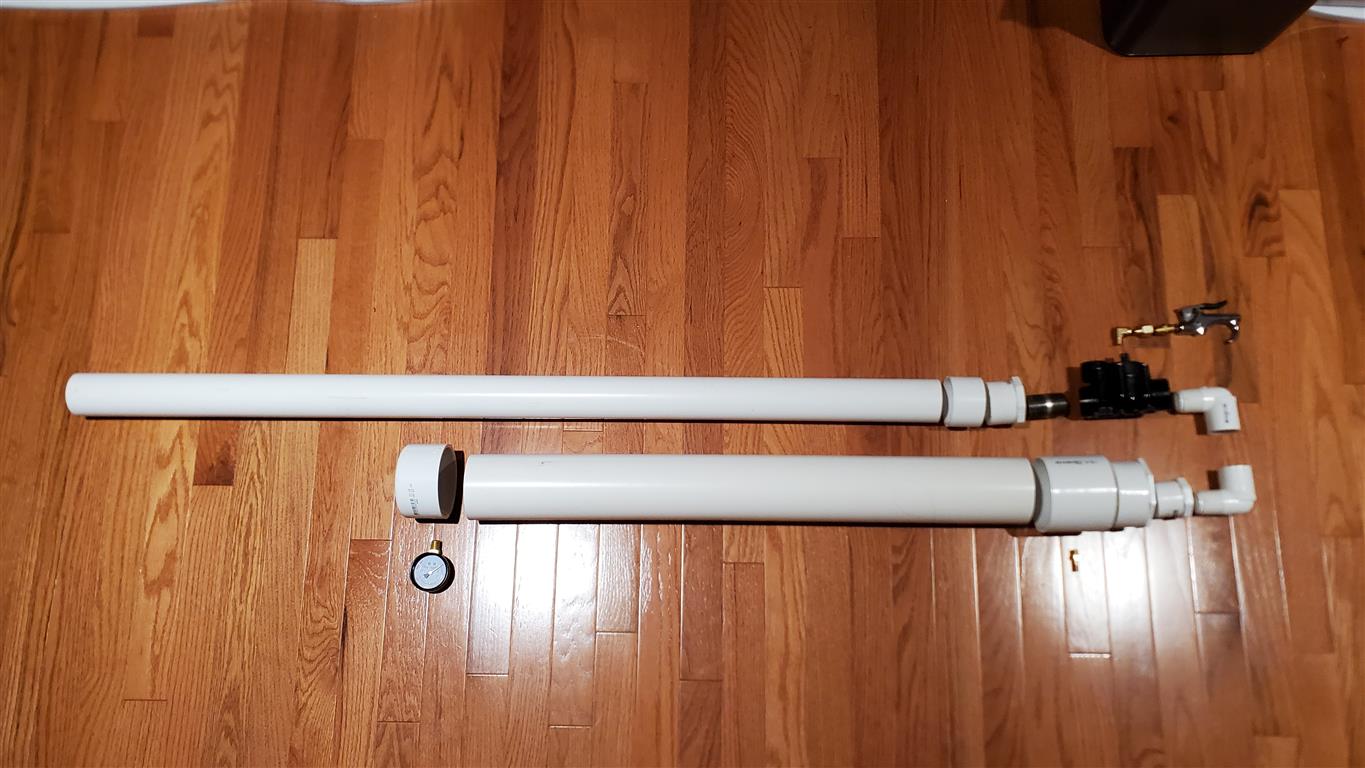
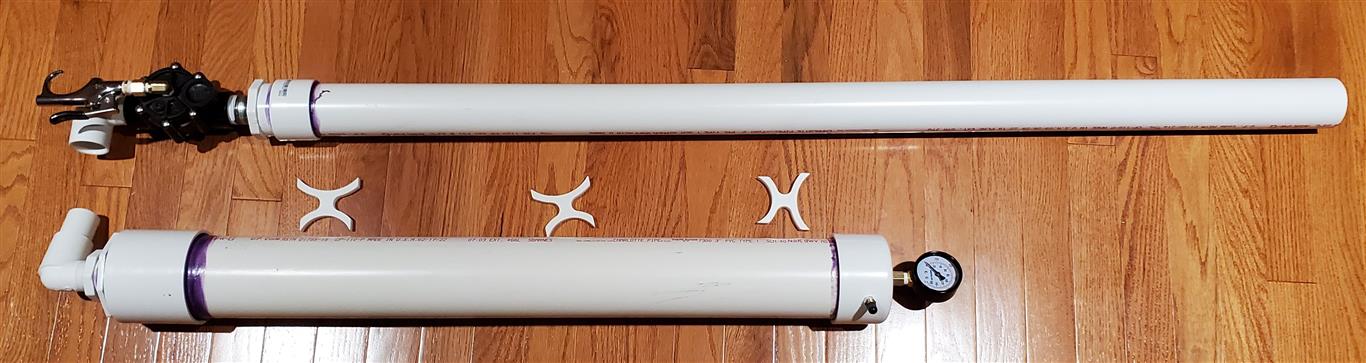
The photo below shows the launcher unassembled. It lays out all the individual pieces and gives a clear picture of how everything fits together before the glue comes out and it becomes a single, very serious piece of hardware.


Click on picture to zoom

Pay attention to how the valve is arranged. It vents directly into the launch tube, joined by a short 1" NPT metal fitting. That’s not accidental — it’s deliberate.

You want the expanding air to act on the projectile immediately, with as little wasted volume as possible between the valve and the ball. Any dead space there is simply compressed air that isn’t doing useful work, and it absolutely robs you of height.

It’s surprising how many commercial “ready-made” launchers get this wrong. They add unnecessary chambers or long transition sections after the valve, which may look tidy but significantly reduce performance.

If you care about efficiency and repeatability, keep the valve as close to the launch tube as possible. Physics doesn’t negotiate.

Valve Modification
The launcher uses a modified Rain Bird CP-100 sprinkler valve. Even after modification, this is not a high-flow, low-restriction dump valve. It will absolutely remain the dominant limiting factor in the system — not the chamber size, not the barrel length - the valve.

Add to that the leakage around a tennis ball and the drag from the monofilament line, and several realities appear:
• Pressure behind the projectile is not equal to tank pressure
• Flow is initially choked (which means fast activation is important)
• Expansion is non-ideal

To get the valve to perform at its best, the upper chamber must vent far faster than the stock solenoid allows. The factory bleed path is extremely small, and the solenoid simply cannot evacuate the diaphragm cavity quickly enough to produce a crisp, high-flow opening.

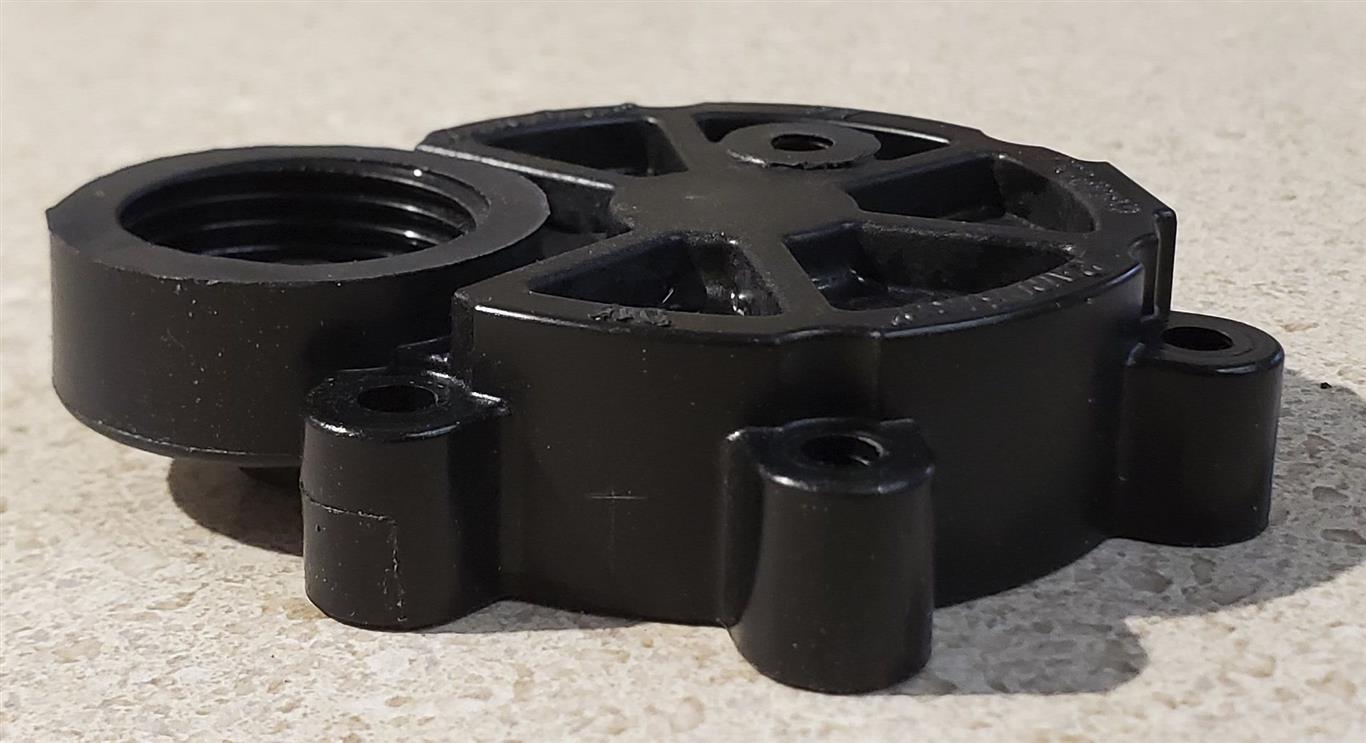
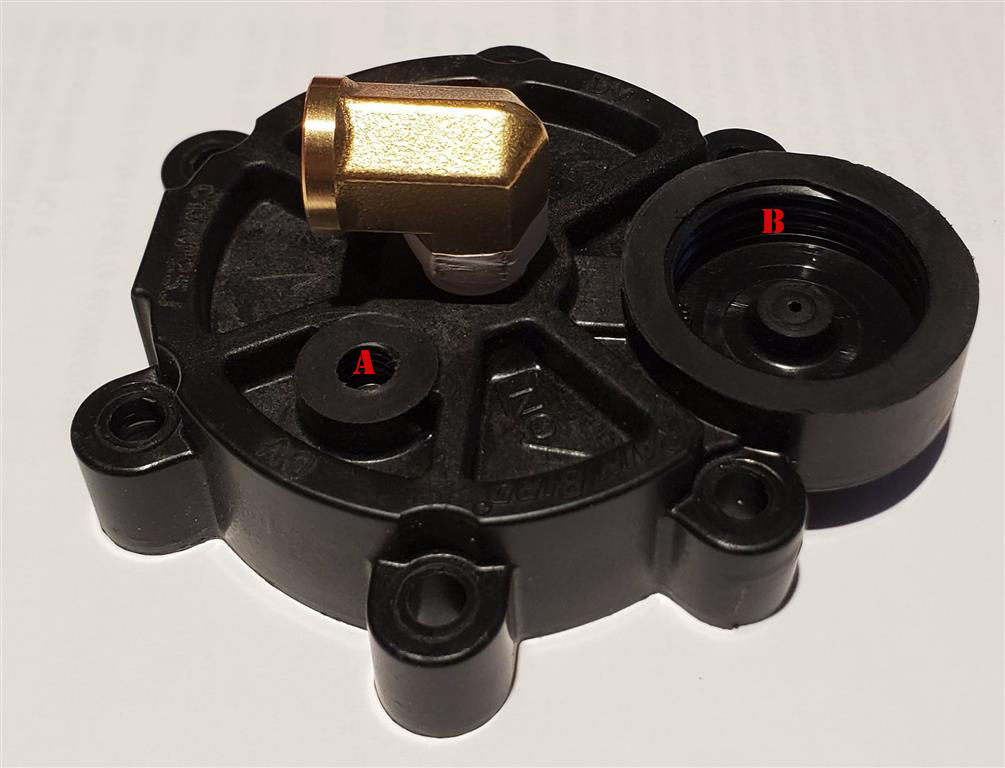
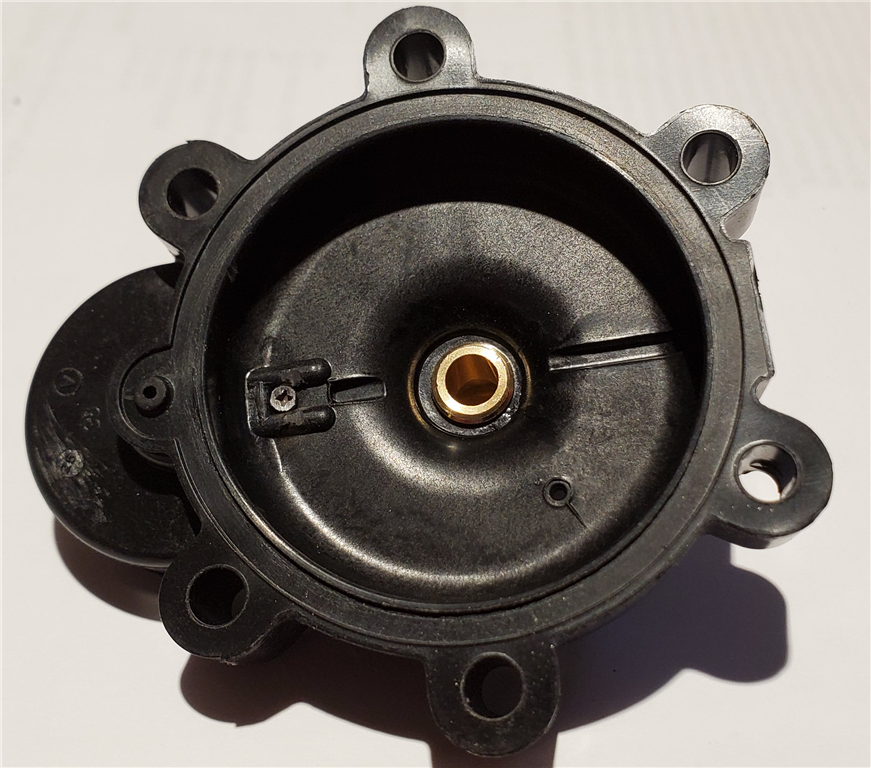
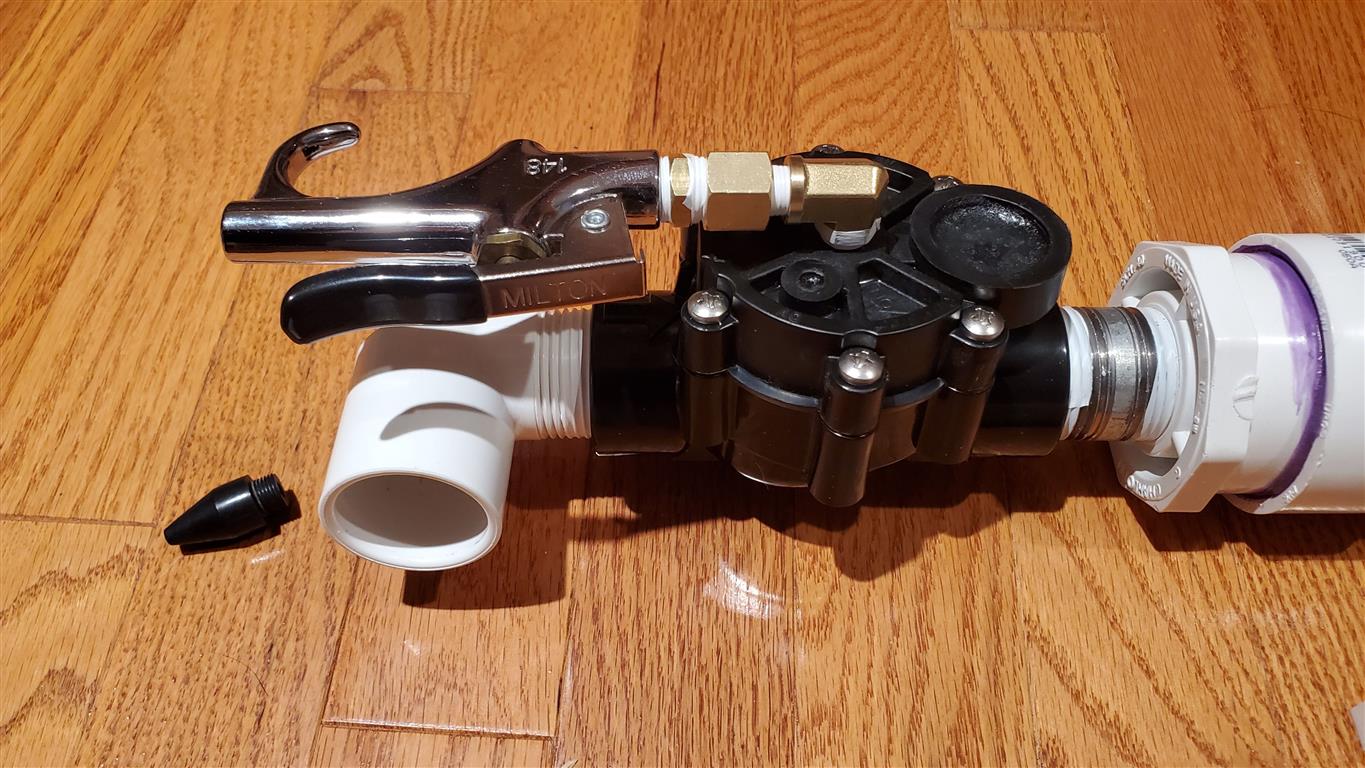
To fix that, the original vent holes were sealed with epoxy and a new dedicated vent port was added.

After removing the solenoid, the top cap can be lifted off without disturbing the diaphragm or spring.
Before disassembling anything, note that the valve is not bidirectional. The flow direction is marked on the body and must be installed so air flows from the tank toward the launcher tube.

Because the cap must go back on in the correct orientation, it helps to mark both the lid and the valve body before disassembly.

Start by removing the six stainless screws securing the lid and set the rest of the valve aside. The raised features on the underside of the cap must be leveled to make room for the new hardware. Grind or mill the high spots until the surface is flat.


Next, drill a centered 11/64-inch hole through the cap and tap it with a 1/8-27 NPT thread. Cut the thread just deep enough for the fitting to seat securely without pressing against the spring underneath, which would interfere with the valve’s operation.

The new vent port uses:
  • a 1/8-inch NPT 90° elbow
  • followed by adapters stepping up to ¼-inch NPT air blow gun
  • connected to an air blow gun that acts as the manual trigger

Pulling the blow gun rapidly vents the pilot chamber and snaps the valve open.

A ¼-inch NPT tap could theoretically be used directly, but removing that much material from the cap risks weakening it. The smaller 1/8-inch thread is the safer choice.


The two original bleed holes in the cap (A and B in the picture above) are sealed with epoxy to eliminate unwanted leakage paths. I also added a small screw from the underside for extra mechanical support, although that step is optional. After the epoxy has fully cured, the valve can be reassembled, taking care to orient the lid correctly.


Once reassembled, install the brass fittings and blow gun. Many blow guns come with a plastic tip that contains a small orifice to increase jet velocity. For this application that restriction is undesirable, so remove the tip to keep the airflow path as open as possible.

All threaded joints should be wrapped with Teflon tape to ensure a tight, leak-free seal.

With an 80-psi chamber and a valve of this type, a 2-inch pneumatic launcher typically produces exit velocities in the 50–70 m/s range, depending on projectile mass and how well it seals in the barrel.

PVC Pipes
Now let’s talk about the PVC pipe — and this part is not just technical nitpicking. It’s about safety. PVC pipe comes in two basic types:

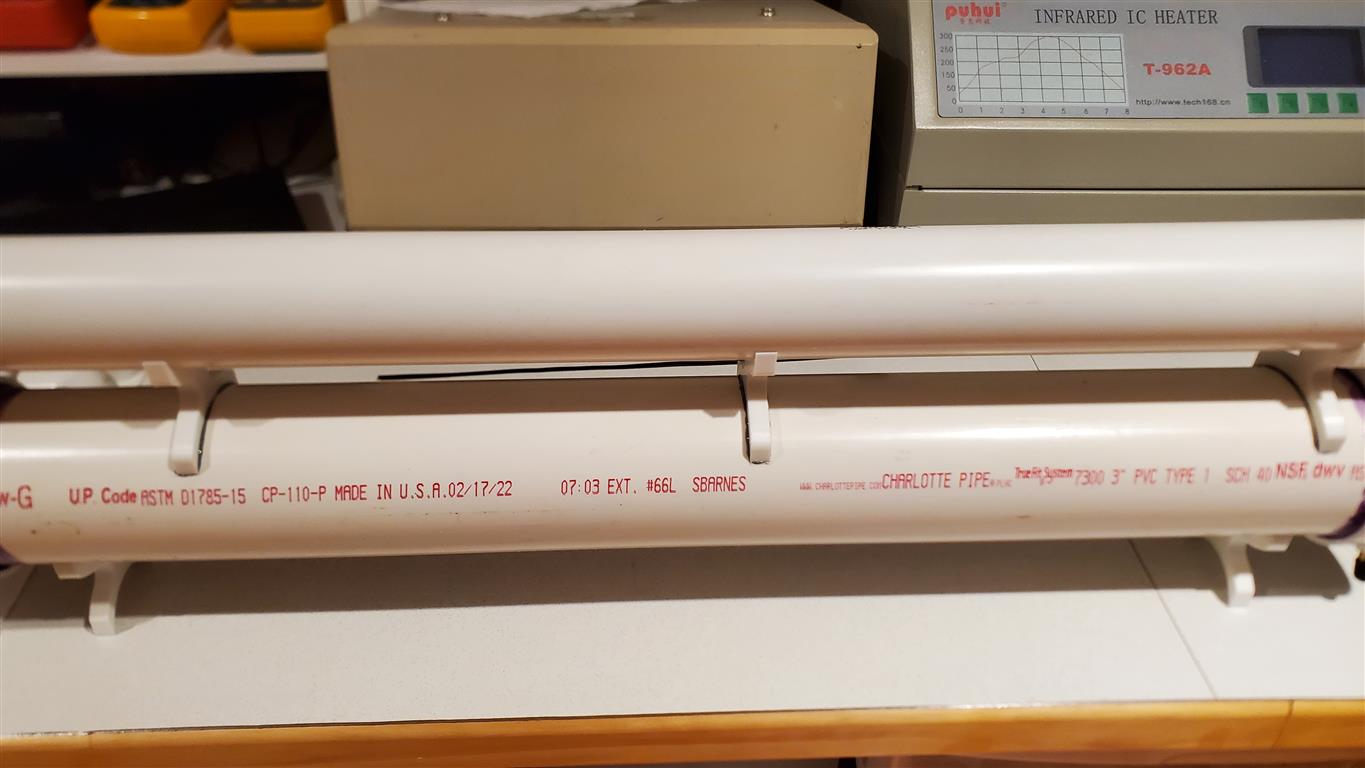
  • The first is Cellular Core. This has a foamed inner layer sandwiched between thin solid skins. It’s lighter and cheaper and is typically labeled for DWV (Drain, Waste, Vent) use only. The pipe may literally say something like “Not for Pressure Applications.” That warning is there for a reason. This material is not designed to hold pressure, and at 80 psi it can fail violently. YOU DO NOT WANT THIS PIPE!
  • The second type is Solid Wall PVC (we use Schedule 40 here). This is a single homogeneous wall — thicker, stronger, and pressure-rated. It will be clearly marked with a pressure rating right on the pipe, and it will be far higher than 80 psi. That is what you want! Don’t guess. Don’t assume. Read the markings. Ask if in doubt.

Do the math: at 80 psi, the internal force acting on a 3-inch diameter tank like the one used here works out to roughly 29,000 pounds distributed across the walls. If that pipe shatters while you’re holding it, it won’t be a minor inconvenience. It will be a trip to the ER — if you’re lucky.

I cut the pipe to length using a circular saw. The 3-inch reservoir was cut to approximately 36 inches, and the 2-inch launch tube to 48 inches. After cutting, clean and deburr the edges thoroughly. Square ends and smooth edges make assembly easier and ensure proper seating in the fittings when everything is glued. Small details like this make a difference later.

The launcher tube requires a 2-inch PVC coupler on one end along with a 2" → 1" NPT reducer.

The air tank receives:
  • a 3-inch PVC cap on one end
  • a 3-inch coupler on the other, followed by a 3" → 2" reducer, and finally a 2" → 1" NPT reducer

Once everything is cut and test-fitted, assemble the reservoir and launch tube as two separate subassemblies.
Before bonding anything, apply purple primer to both mating surfaces — and do it twice. Follow the instructions on the can. The primer is not optional; it softens the PVC and allows the cement to chemically weld the parts together.


When applying the cement, don’t be stingy. Use fresh glue and apply a full, even coat. You’re building a pressure vessel, not assembling a drain pipe. This is not the place to cut corners.

After bonding, allow a full 24 hours for the joints to cure. Not overnight. Not “a few hours because it feels solid.” Let it cure properly.

Schrader Valve and Gauge


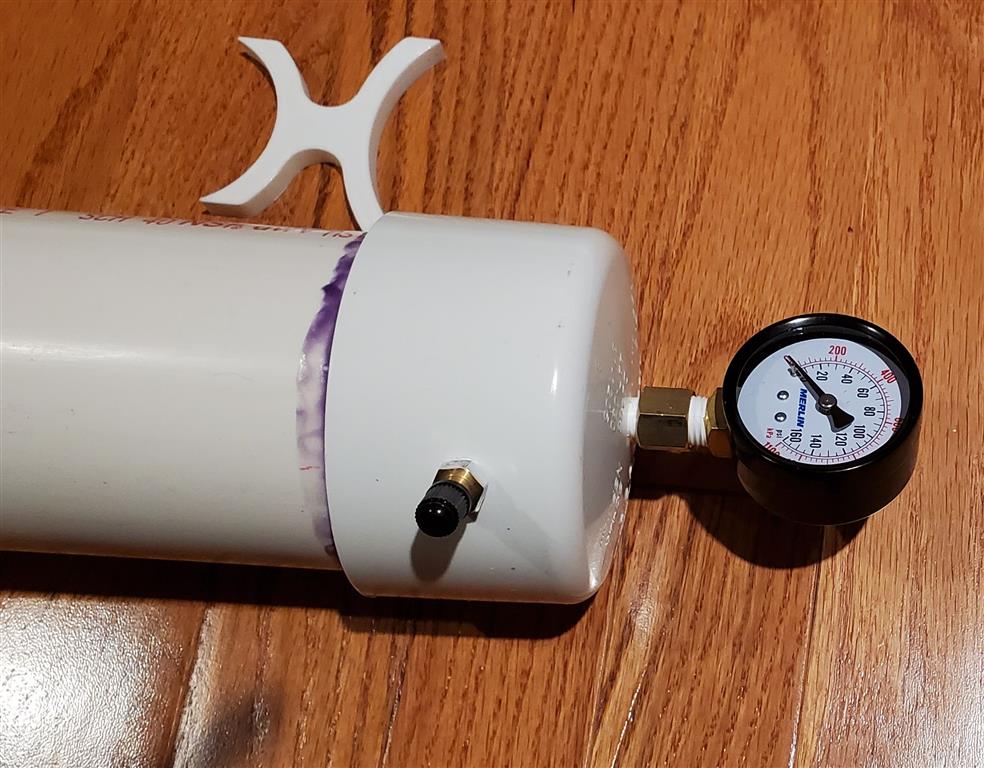
Once the PVC joints have fully cured, drill and tap the hole for the Schrader valve. Schrader stems use 1/8-inch NPT threads, so the process mirrors what was done on the Rain Bird valve.

A pressure gauge can also be added at this stage. It’s optional, but very useful for monitoring tank pressure during filling and operation. The gauge I used had ¼-inch NPT threads, so a small brass adapter was needed to step it down to 1/8-inch NPT.

Placement of these components is flexible, but think about ergonomics. Choose a location that is easy to see while filling the tank and easy to reach while handling the launcher.

As before, use Teflon tape on all threaded connections.

Important: Any plastic shavings left inside the tank after drilling and tapping must be removed. Even small debris can be blown downstream into the valve and jam or damage the diaphragm.

Final Plumbing
Next, install the sprinkler valve onto the launcher tube assembly: Thread the 1" NPT connector into the launcher tube side and install the 90° elbow on the valve inlet. Remember: the valve is not bidirectional — air must flow from the tank toward the tube.


Install the matching 90° elbow on the reservoir side as well.

Take your time aligning everything so the geometry is clean and the valve sits exactly where you want it. When finished, the assembly should look deliberate — not like plumbing that happened by accident.

Wrap every threaded fitting with Teflon tape. Don’t skip this step. Even a small leak will reduce performance and consistency. Use tape rather than liquid thread sealant; paste sealants tend to be messy and harder to control in applications like this. Wrap the tape neatly in the direction of the threads — two or three tight turns is usually enough.

At this point the two subassemblies are ready to be joined. All that’s required is a short 2.5-inch section of 1-inch PVC pipe, which acts as the coupler between the two 90° elbows.

Final Assembly
When you dry-fit the two assemblies, you’ll notice a sizable gap between the tubes. Left unsupported, this span will flex under load, and over time that movement could lead to structural failure.

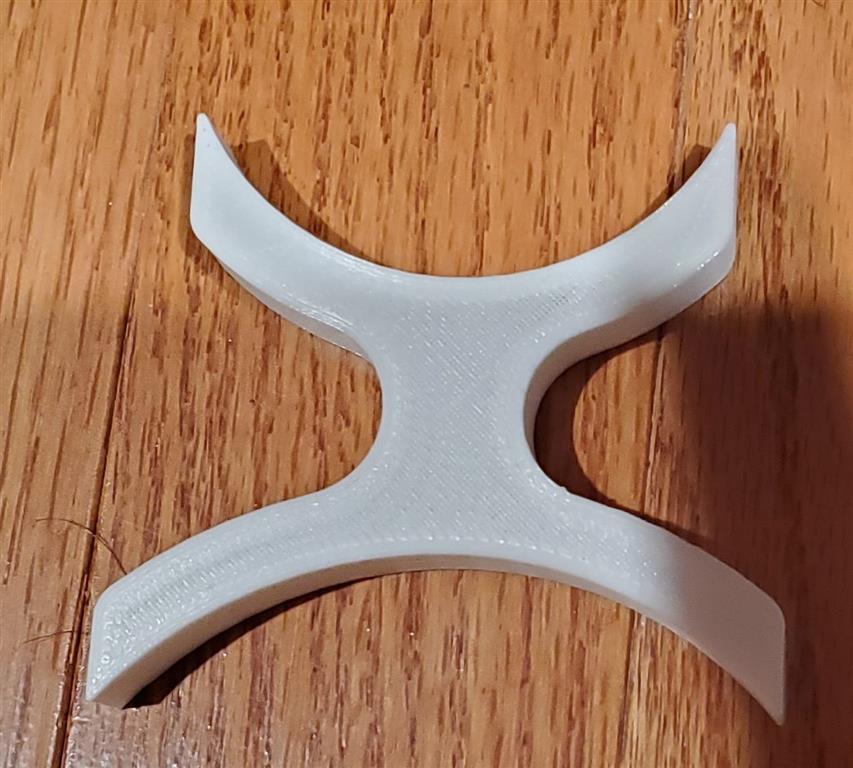
To eliminate that flex, I designed a set of 3D-printed spacers. If you don’t have access to a printer, there are other workable solutions, but the important point is that the two tubes must be securely tied together.
The spacer SLA file can be downloaded here.


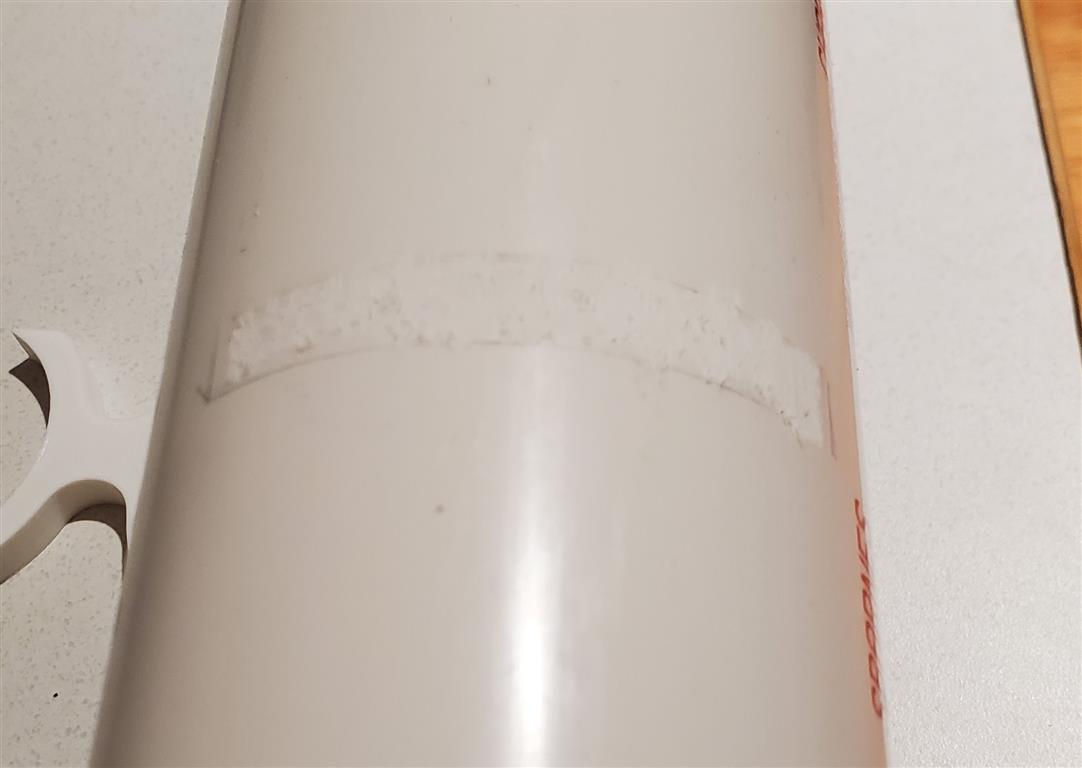
The spacers are bonded to the air reservoir tube using epoxy, not superglue! PVC cement does not bond reliably to most printing plastics — mine were printed in PLA — so epoxy is the correct choice.

Dry-fit the entire assembly first to determine the exact spacer positions. Mark those locations, disassemble the launcher, and roughen both the PVC and spacer surfaces to give the epoxy a good mechanical grip.


I used J-B Weld, which forms a strong and durable bond. Apply a thin, even layer to both the spacers and the reservoir tube, position them on the marked locations, and immediately reassemble the launcher so the tubes settle into their final alignment. This ensures the spacers cure in exactly the correct position.


Once the epoxy has hardened, separate the assemblies again.

Apply PVC primer and cement to the 2.5-inch 1-inch coupler section, then permanently join the launcher while ensuring the launch tube rests firmly on all spacers.


The launch tube itself is not epoxied to the spacers. Leaving it free allows the launcher to be disassembled later for repairs or upgrades. Instead, I used zip ties at both ends to secure the tubes together. Once tightened, the structure becomes solid and well supported.

Finishing Touches
For the line system, I used monofilament fishing line tied directly to the projectile. A simple, inexpensive fishing reel mounted at the end of the launcher keeps everything organized.

I used 10-lb mono, which flies well and keeps drag low. It isn’t strong enough to haul up antennas directly, so once the projectile lands a secondary mason line is attached and pulled up before hauling anything heavier.

The projectile is a 2-inch tennis ball—specifically the small dog-toy type. These work very well for this application. To bring the ball up to the desired weight, it needs to be filled with 40 pennies.

Start by making a clean incision in the ball about one inch long. Through this opening, insert the forty one-cent coins. It will be a tight fit, which is actually desirable since you don’t want the center of mass shifting around inside the ball.


Before inserting the pennies, it’s a good idea to squeeze a small amount of RTV silicone into the ball. This helps immobilize the coins so they don’t move as much. Be careful not to get any silicone on the edges of the cut where the ball will later be glued closed.

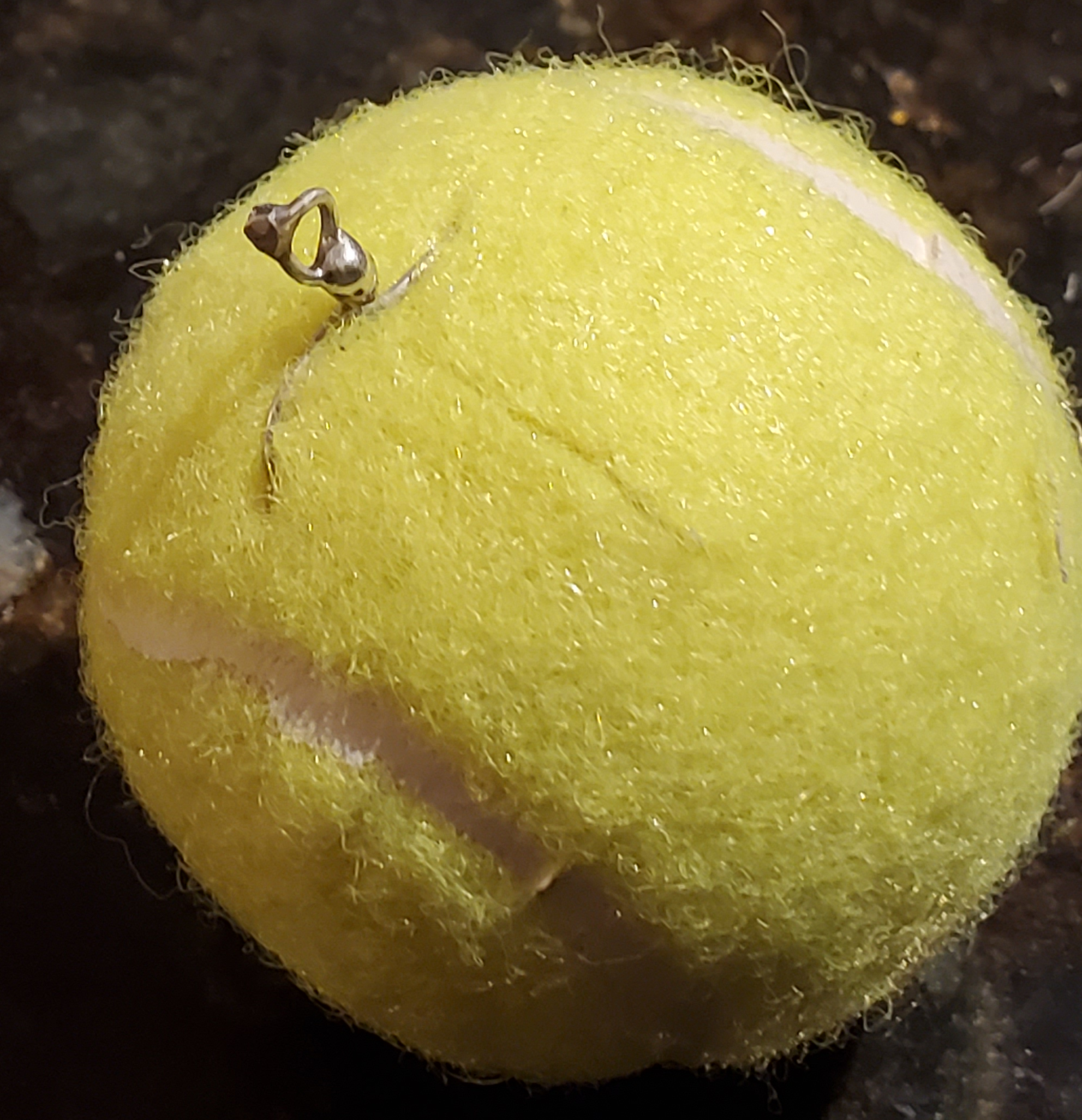
Next, use a small drill to make two small holes, centered on opposite sides of the incision. A piece of wire will be passed through these holes, which will serve as the attachment point for the monofilament line. This is fairly difficult to accomplish with a single piece of wire, so instead I used two separate pieces. After inserting them through the holes, I soldered them together inside the ball, creating a secure attachment point.

Finally, use super glue to bond the cut edges of the ball back together. Once the glue has set, finish twisting the wire to form a secure loop for attaching the monofilament line.


You can use just about any fishing reel for this setup, but I recommend 10 lb monofilament and a reel that can hold at least 300 yards of line.

I mounted the reel to the bottom of the launcher tube using steel clamps, making sure it remains easy to access and operate. Near the top of the launcher tube (the exit end), I added a couple of tie-wraps arranged to form a small loop—similar to the guides you find on a fishing rod. This ensures the line feeds to the reel from the correct direction and stays under control. No need to reinvent the wheel when the fishing world already solved that problem.

Finally, there is about 0.5 mm of clearance between the ball and the launcher tube. That gap allows air to blow past the ball, which significantly reduces the force acting on it, and therefore its acceleration and overall performance.

Fortunately, there are several ways to address this. I chose the simplest—and probably the most effective—solution: a plastic grocery bag. Just bunch it up a into a wad and push it down the launcher tube before dropping in the ball. You only need one! This acts as a simple wadding, sealing the air behind the projectile. The difference in performance is huge, and it also improves shot-to-shot consistency - and no, the bag will not go far, only few feet.

The second part of this article,First Field Test of the Antenna Launcher,” shows the launcher in practical use and includes several videos from the field test.

Before Antenna Launchers: How Hams Used to Get Wires Into Trees

Long before compressed-air antenna launchers became popular, amateur radio operators used a variety of creative methods to get antenna wires into tall trees.

One of the most common tools was a simple fishing rod with a heavy sinker tied to the line. The operator would cast the weight over a branch and then use the fishing line to pull up a stronger cord, followed by the antenna support rope. This method still works today and is often used for lower trees.

Another classic technique was the slingshot. A lead weight or a socket from a tool set would be attached to a lightweight line and launched over a branch. Many hams built specialized “Big Shot” style slingshots capable of reaching impressive heights.

In some cases, ingenuity took over. Stories circulate of tennis balls thrown by hand, bows and arrows with fishing line attached, and even pneumatic potato cannons adapted for antenna work.

Modern compressed-air antenna launchers simply refine these old ideas. They allow a pilot line to be placed accurately over very tall branches with minimal effort and repeatable results. While the technology has improved, the goal remains the same as it was in the early days of amateur radio: getting a good wire antenna as high in the trees as possible.


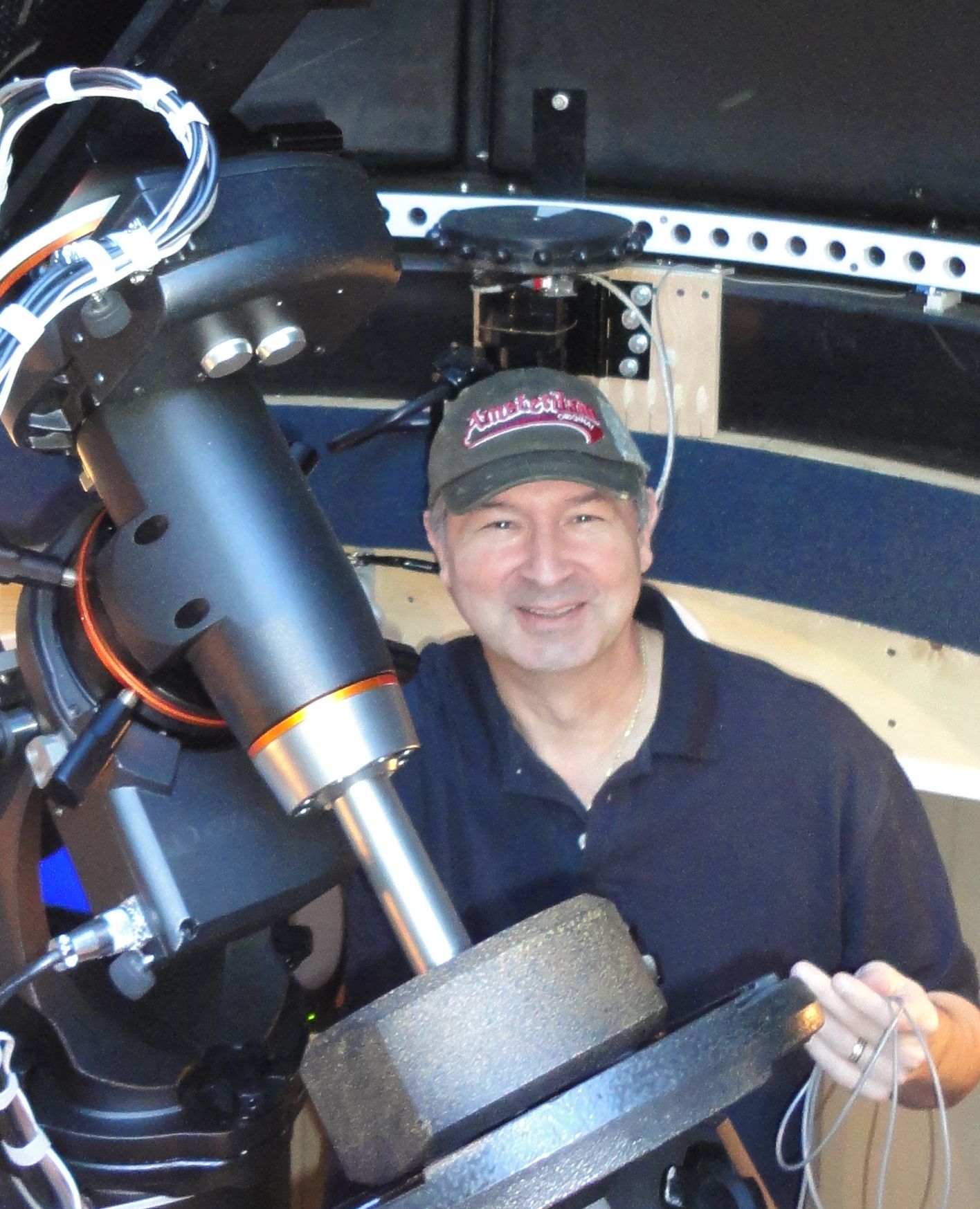
This article is reprinted with permission of the author, Christopher Krstanovic - AI2F.
About Author
Christopher Krstanovic, AI2F, is a lifelong amateur radio operator, first licensed in the US in 1980s as WR1F. He holds degrees in Physics and a PhD in Electrical Engineering, and his career has spanned corporate engineering as well as technology entrepreneurship. After leaving corporate America, he founded and led three companies before returning to active amateur radio under his current call sign. His operating interests include HF, antenna design, practical radio engineering, Astronomy.


Safety and Liability Disclaimer
The information contained in this article is provided for general educational and informational purposes only. It describes one possible method of constructing an antenna line launcher using commonly available materials. The author and publisher make no guarantees regarding the accuracy, completeness, or safety of the information presented.

Construction and operation of any device that uses pressurized air, mechanical energy, or launches projectiles can be dangerous. Improper design, materials, assembly, or use may result in equipment failure, property damage, serious injury, or death.

By choosing to build or use any device based on the information in this article, the reader acknowledges and agrees that:
• They assume all risks associated with construction and operation.
• They are solely responsible for determining the suitability and safety of all materials and components used.
• They are responsible for complying with all applicable laws, regulations, and safety practices in their jurisdiction.

The author, publisher, and any affiliated organizations disclaim all liability for any damages, injuries, losses, or consequences that may arise from the use or misuse of the information provided.

This material is presented strictly for informational purposes. Construction or use of any device described herein is done entirely at the reader’s own risk.

Organizational Liability Notice
This article may be hosted or referenced by amateur radio clubs, organizations, or websites for informational purposes. The inclusion of this material on any website or publication does not constitute endorsement, approval, or verification of the design.

Any organization hosting or linking to this article, including amateur radio clubs, assumes no responsibility for the construction, use, or misuse of any device based on this information.

All responsibility for design, construction, and safe operation rests solely with the individual builder or operator.
Readers should understand that antenna line launchers and similar devices may be subject to local laws or restrictions. It is the responsibility of the individual builder or operator to ensure compliance with all applicable regulations.


Copyright 2026 © Cabarrus Amateur Radio Society. All Rights Reserved.